Coobi
Impact Metrics
- 44% increased check-ins
- 13% increase in app engagement
- 80% more accessible
- 27% fewer drop-offs
Overview
Problem
The need for solutions in online addiction
While some products address online and media addiction, they often focus on a single domain, overlooking other contributing factors. A comprehensive approach emphasizing behavioral change is essential.
Solution
Using biometric insights to manage media usage
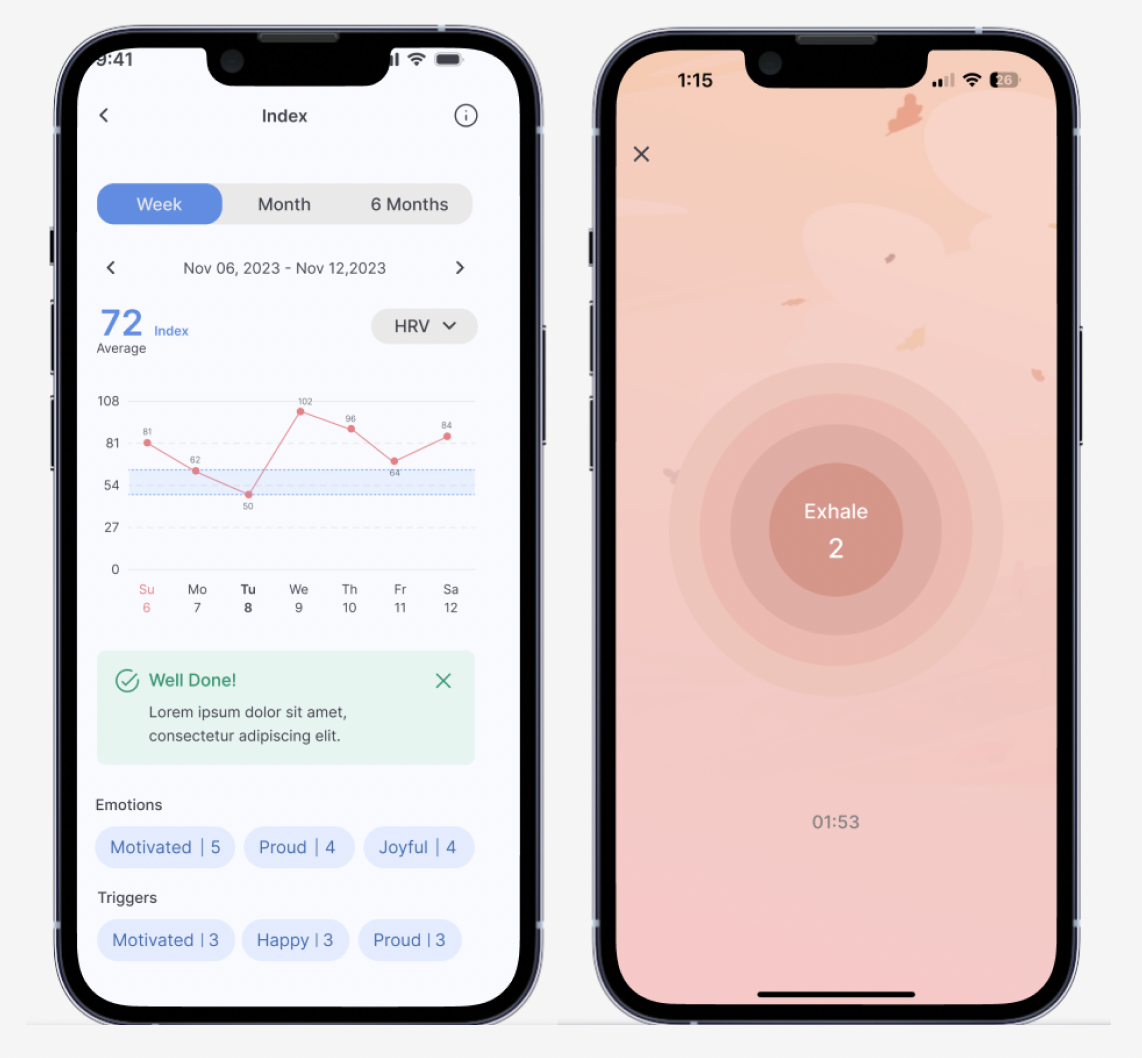
Helping people recover from media addiction, Coobi tracks HRV, stress, and data from Apple Health/Google Fit, offering personalized interventions while aiming to predict and prevent cravings through data analysis.
My Contribution
My role was to refine the progress tracking experience, ensuring that users could engage with their recovery data without feeling overwhelmed.
- Analyzed existing design decisions
- Focused on the progress tracking page
- Refined data visualization
Research Insights
Understanding the Problem
- 85% of users attempting a digital detox relapse within the first week
- Only 19% of people with media overuse tendencies seek help
- 62% of young adults say they feel "attached" to their phones
Design Goals
- Provide clear visualizations
- Consistent Engagement
- Clear and readable data
- Relaxed interaction
Key Design Consideration
One of the primary design goals was to create an experience that would not overwhelm or trigger users. The aim was to ensure that the app feels welcoming, supportive, and approachable from the very first interaction, fostering a sense of safety and trust for individuals dealing with online addiction.
Design Process
Progress Tracking
My role as a UX design intern involved creating a progress tracking page that empowers users to monitor their recovery journey without feeling overwhelmed or triggered.
How Might We...
- Provide actionable insights without overwhelming the user?
- Enable users to view both short-term and long-term progress?
- Present sensitive biometric and emotional data in a supportive and constructive way?
User Flow
Home → Trends → Time/Date → HRV/HR Data → Chart
Ideation
I used the Crazy 8s method to rapidly explore design concepts. Early sketches focused on exploring how charts and time toggles could be organized.
Final Prototype
View the final prototype video: Coobi Final Prototype
Reflections
Designing for Sensitivity
I learned how to translate clinical CBT content into approachable and empathetic interfaces, making sure the language and flow felt supportive rather than overwhelming for users in recovery.
Feedback to Function
Weekly sprints and feedback loops taught me the value of iteration. Each round of refinement strengthened usability while keeping therapeutic relevance at the core.
Psychology + UX
This project deepened my ability to combine research insights with design choices, reinforcing my confidence in creating digital tools that are both impactful and clinically meaningful.
Visualizing Emotions
Through mood boards and sketches, I explored how color, tone, and layout could mirror the emotional journey of users. This helped me design an experience that felt safe, motivating, and relatable.