Stripe Mobile App
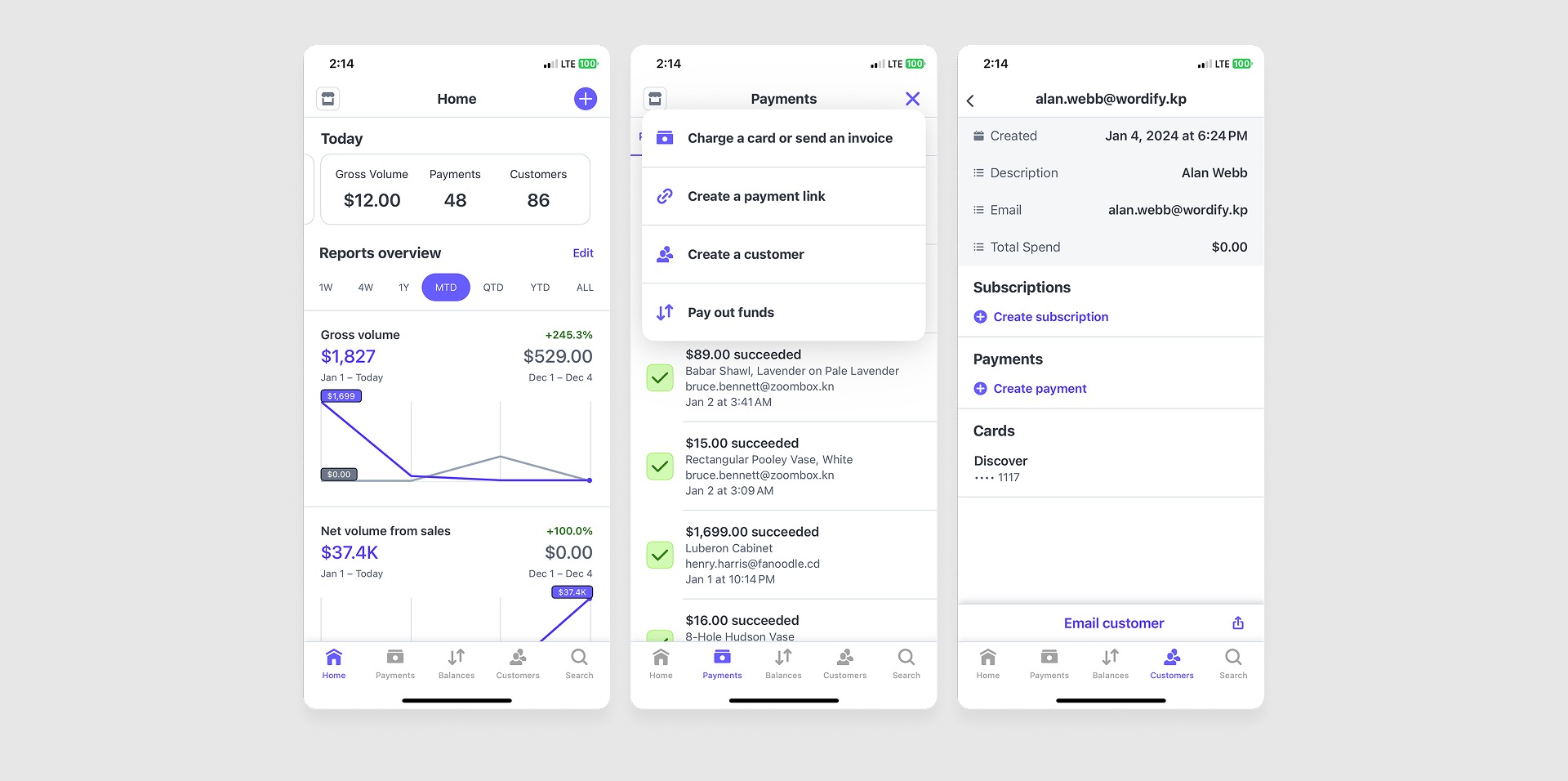
Stripe Mobile App
Stripe's merchants are increasingly running their entire business from their phone. From solo founders of internet-only businesses, to small businesses who collect payments using tap-to-pay, to entire fleets of salespeople using text messages to pitch new clients - for many people, commerce is mobile.
Despite this reality, in 2023, Stripe's two flagship mobile-focused products, tap to pay and payment links, were not available via Stripe's mobile app. When I joined the mobile team, we set out to change this.
Supporting Features
Adding payment links to the Stripe app required many additional features: adding, listing, and editing products; creating multiple price points; adding discounts; switching payment types during a transaction. The team exhaustively mapped out all supporting features and plotted a course to implement them.
Entry Points & Discoverability
Another challenge when introducing new features is putting them where a user is likely to find them, but not at the expense of existing patterns and muscle memory. We explored a wide number of options, from enabling users to create new payments from the tab bar, to more contextual alternatives.
New Opportunities
Because the merchant was using their phone and likely interacting with customers face-to-face, we could take advantage of QR codes and native sharing to make the payment process more seamless. Both integrations increased adoption of payment links substantially - instead of cannibalizing users, the mobile app created entirely new user segments.
Impact
By adding tap-to-pay and payment links to the Stripe app, we supported existing mobile-first merchants and enabled entirely new use cases. In the 6 months after launching these features, monthly active users jumped from 372k to 517k (2x) and payment volume from the mobile app went from $32M to $130M (4x). Bringing more features to users through the mobile app is now a proven strategy to grow adoption of Stripe's products.